It’s often the subjects I know the least about that end up fascinating me the most.
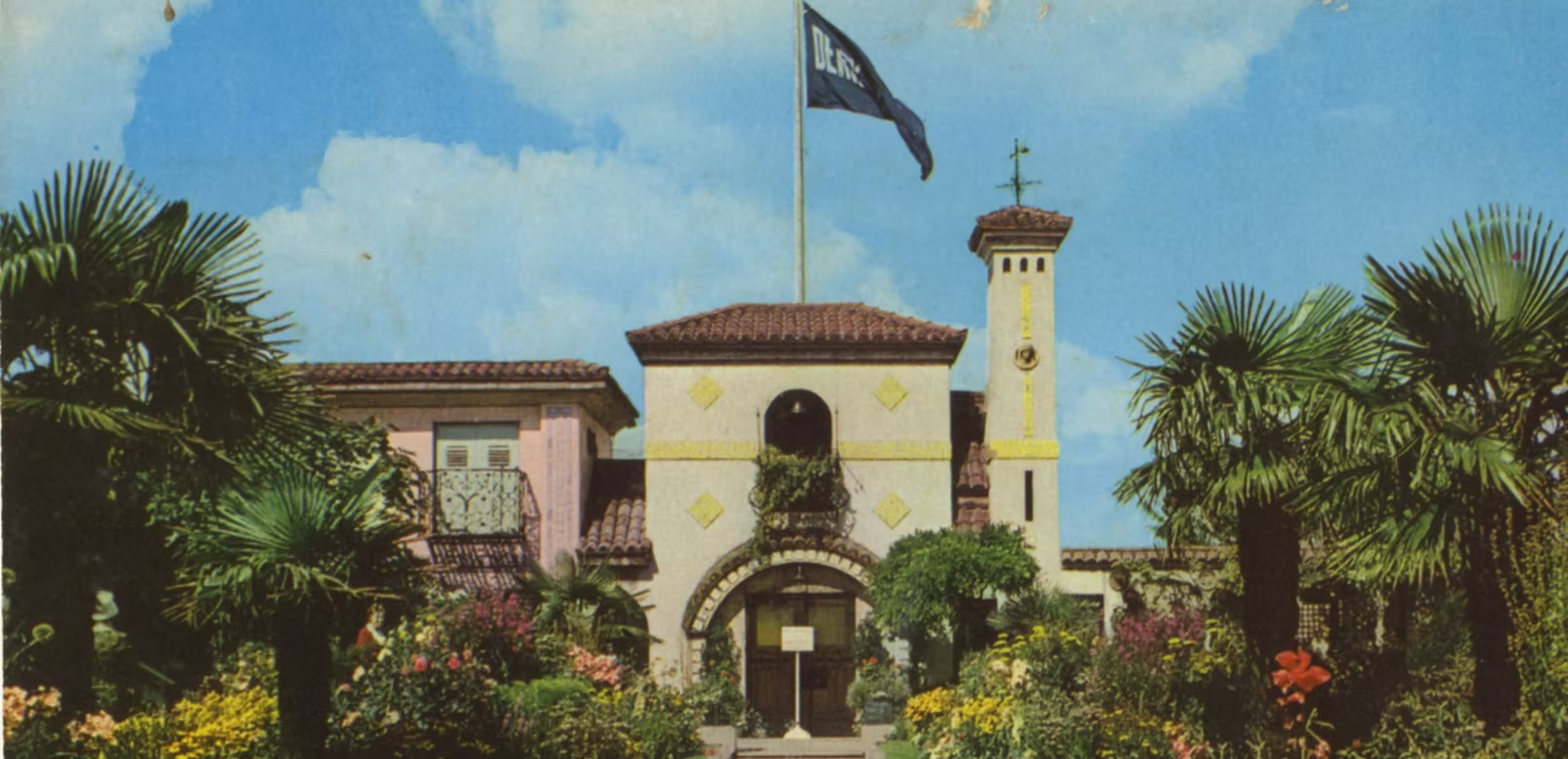
I first came across the work of Ralph Hancock almost by accident. Living in West London, I had long been aware of the legendary Roof Gardens above Kensington High Street, but I had never stopped to think about the person behind them. The more I read, the more extraordinary the story became: a Welsh horticultural visionary who transformed rooftops into landscapes, designed gardens in both London and New York, and helped redefine what urban gardening could be at a time when the idea seemed almost impossible.
Today, Hancock is largely remembered for the remarkable Roof Gardens at Derry & Toms in Kensington, opened in 1938, and for the ambitious Gardens of the Nations he created atop Rockefeller Center a few years earlier. Yet his career was far richer than these celebrated projects alone. Part landscape architect, part showman and part dreamer, Hancock belonged to a generation that believed gardens could transport people elsewhere, whether to Tudor England, Moorish Spain or a woodland retreat suspended several storeys above a busy city street.
Luckily for researchers like myself, Hancock’s family has created an extensive archive dedicated to his life and work, preserving photographs, drawings and personal stories that reveal not only the scale of his achievements but also the remarkable personality behind them.
A Welsh Gardener with Ambitious Ideas
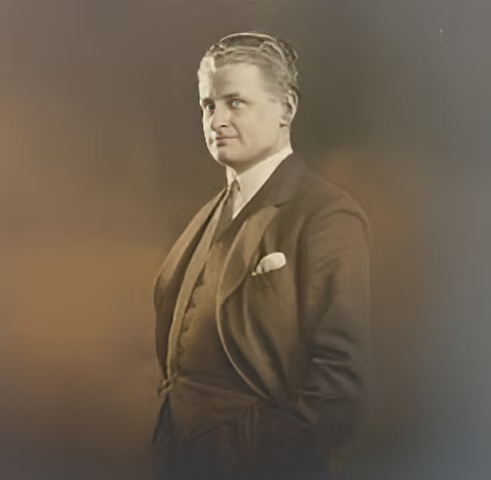
Born in Cardiff in 1893, Ralph Hancock did not begin his career as a landscape designer. Like many people of his generation, his early life was interrupted by the First World War, during which he served in the military. Following the war, he pursued his passion for horticulture, eventually becoming a Fellow of the Royal Horticultural Society.
His talent quickly attracted attention among wealthy clients and members of the British aristocracy. One of his early commissions was the garden at Coppins, the Buckinghamshire home of Princess Victoria, daughter of King Edward VII. These prestigious projects helped establish Hancock’s reputation as an innovative designer with a flair for combining horticultural knowledge with dramatic visual effect.
By the mid-1930s Hancock had become one of the most celebrated garden designers in Britain. His elaborate show gardens at the Chelsea Flower Show attracted considerable attention, winning consecutive gold medals in 1936, 1937 and 1938. Unlike the more botanical displays common at the time, Hancock’s designs often felt theatrical and immersive, featuring architectural structures, water features and carefully staged views that hinted at the larger projects he would later become famous for.
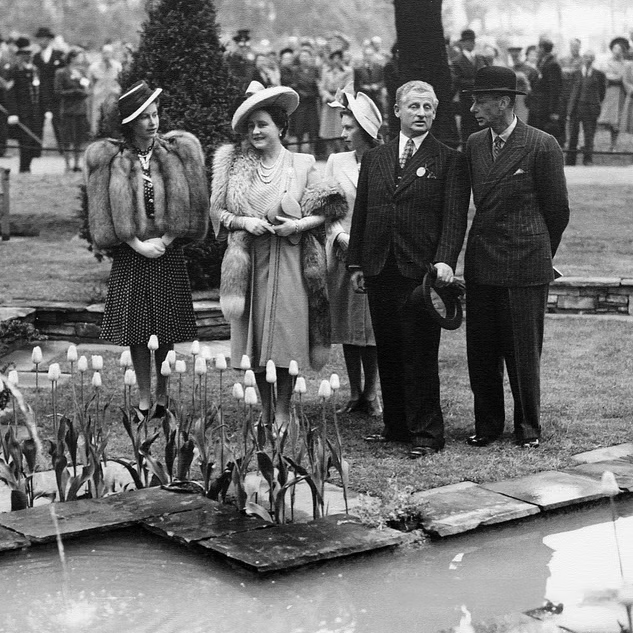
Ralph Hancock with the Royal Family at The Chelsea Flower Show, 1947
Taking Gardens into the Sky
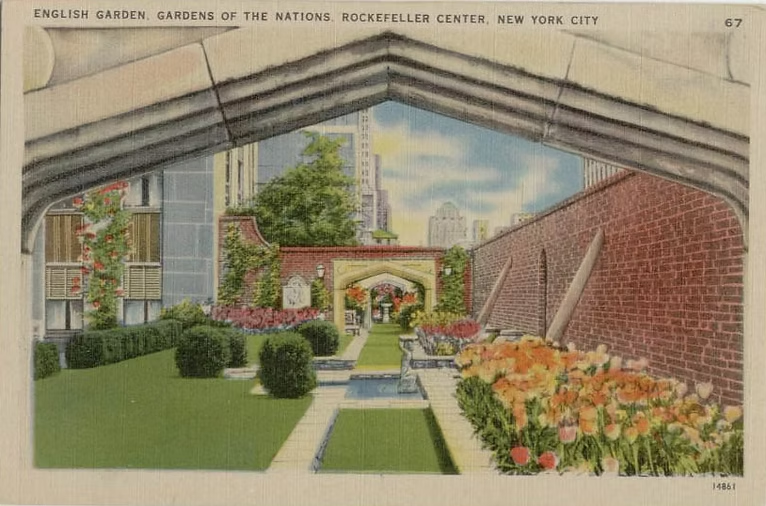
Hancock’s career took a remarkable turn when he was commissioned to create the Gardens of the Nations at Rockefeller Centre in New York during the early 1930s. The project consisted of a series of themed rooftop gardens representing different countries, including England, France, Italy and Japan.
The scheme was groundbreaking. While rooftop gardens existed before, few had been attempted on such a scale. Hancock demonstrated that rooftops could become destinations in their own right, offering beauty, recreation and a connection to nature within the heart of a modern city. The project attracted international attention and cemented his reputation as a pioneer of rooftop landscaping.
Bringing the Idea to Kensington
The success of the Rockefeller gardens caught the attention of Trevor Bowen, chairman of the department store Derry & Toms on Kensington High Street. Inspired by Hancock’s work in New York, he commissioned the designer to create an ambitious rooftop garden above the store.
Opened in 1938, the Roof Gardens occupied around one and a half acres and were divided into three distinct spaces: the Tudor Garden, inspired by traditional English gardens; the Spanish Garden, with its Moorish influences and water features; and the Woodland Garden, complete with mature trees, streams and wildlife. Together they created a remarkable escape from the city below and quickly became one of London’s most celebrated attractions. Visitors were charged one shilling to enter the gardens, a fee that was donated to local hospitals. It was a small price to pay for what must have felt like an extraordinary journey to another world, hidden above the rooftops of Kensington.
This video, shows the Derry Roof Gardens in 1949. A delightful look at the gardens 11 years after they opened to the public. And you can see the gardens in 1958, here, this time in colour.
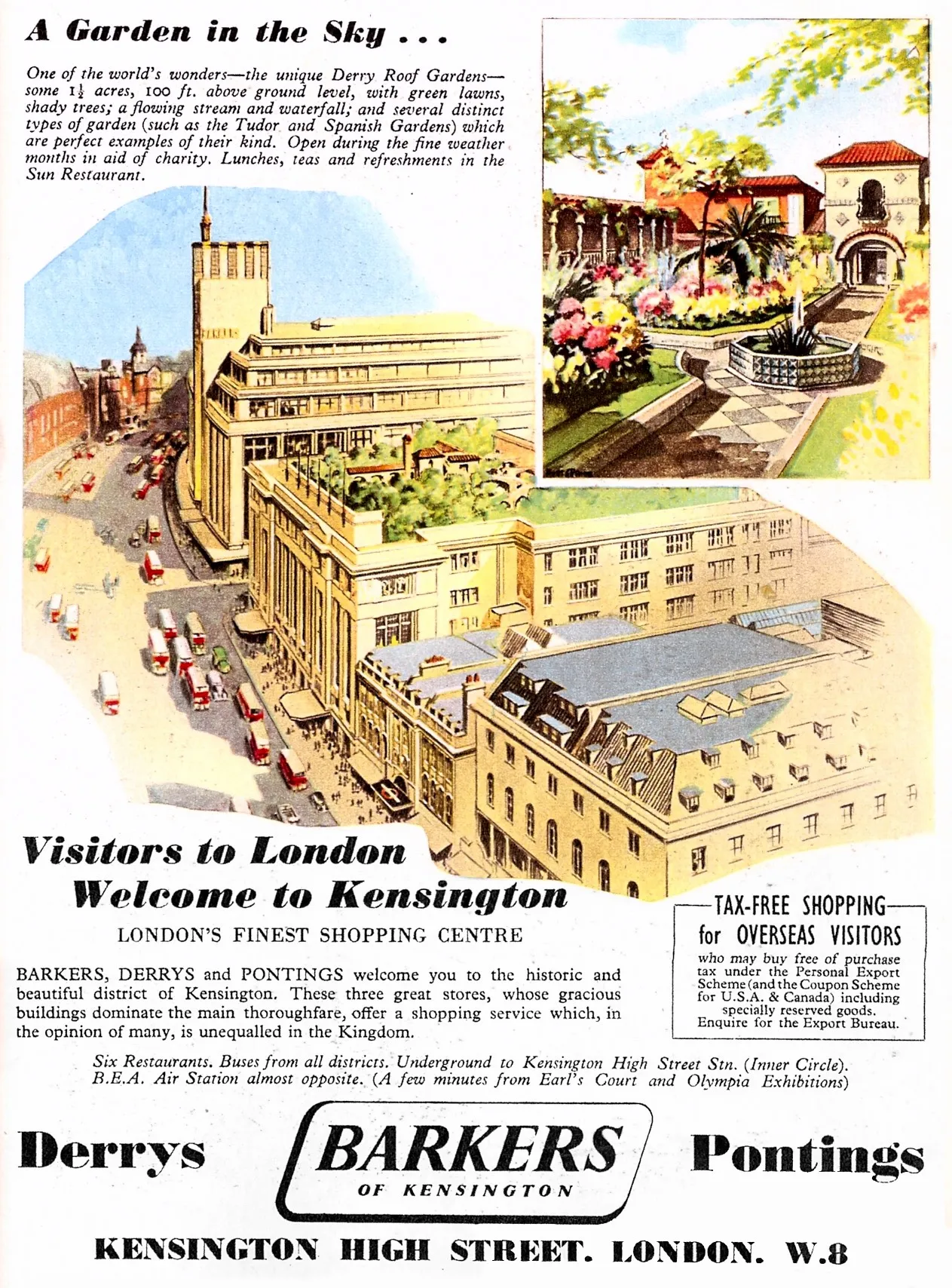
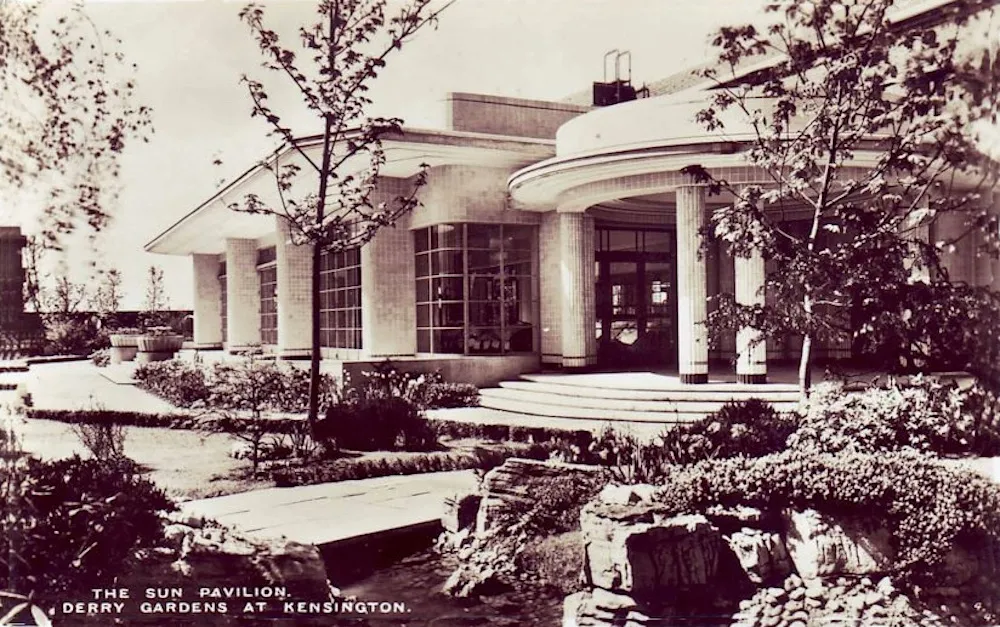
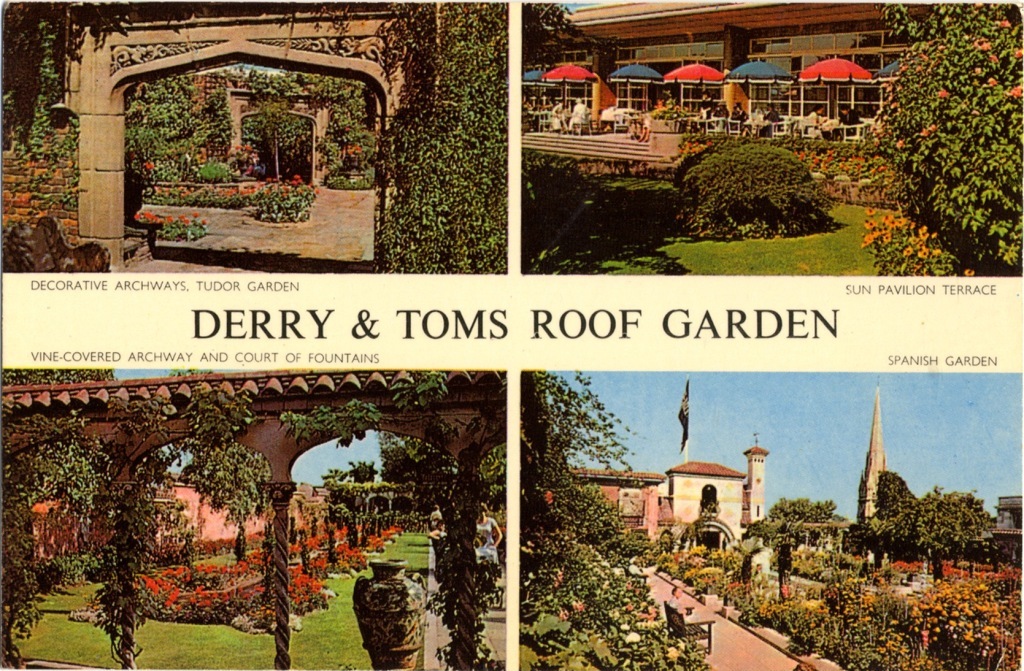
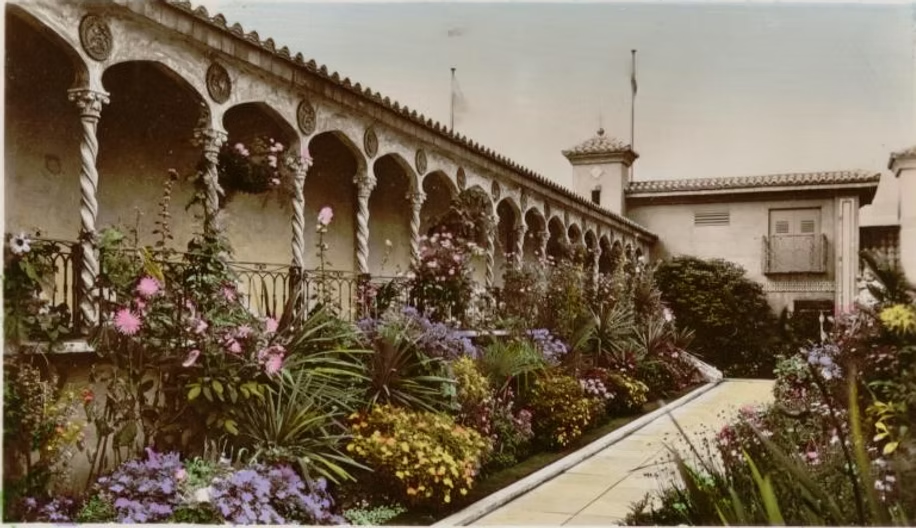
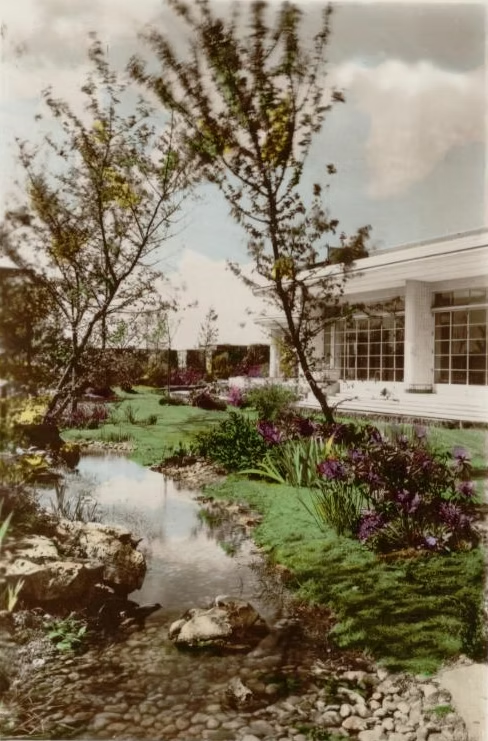
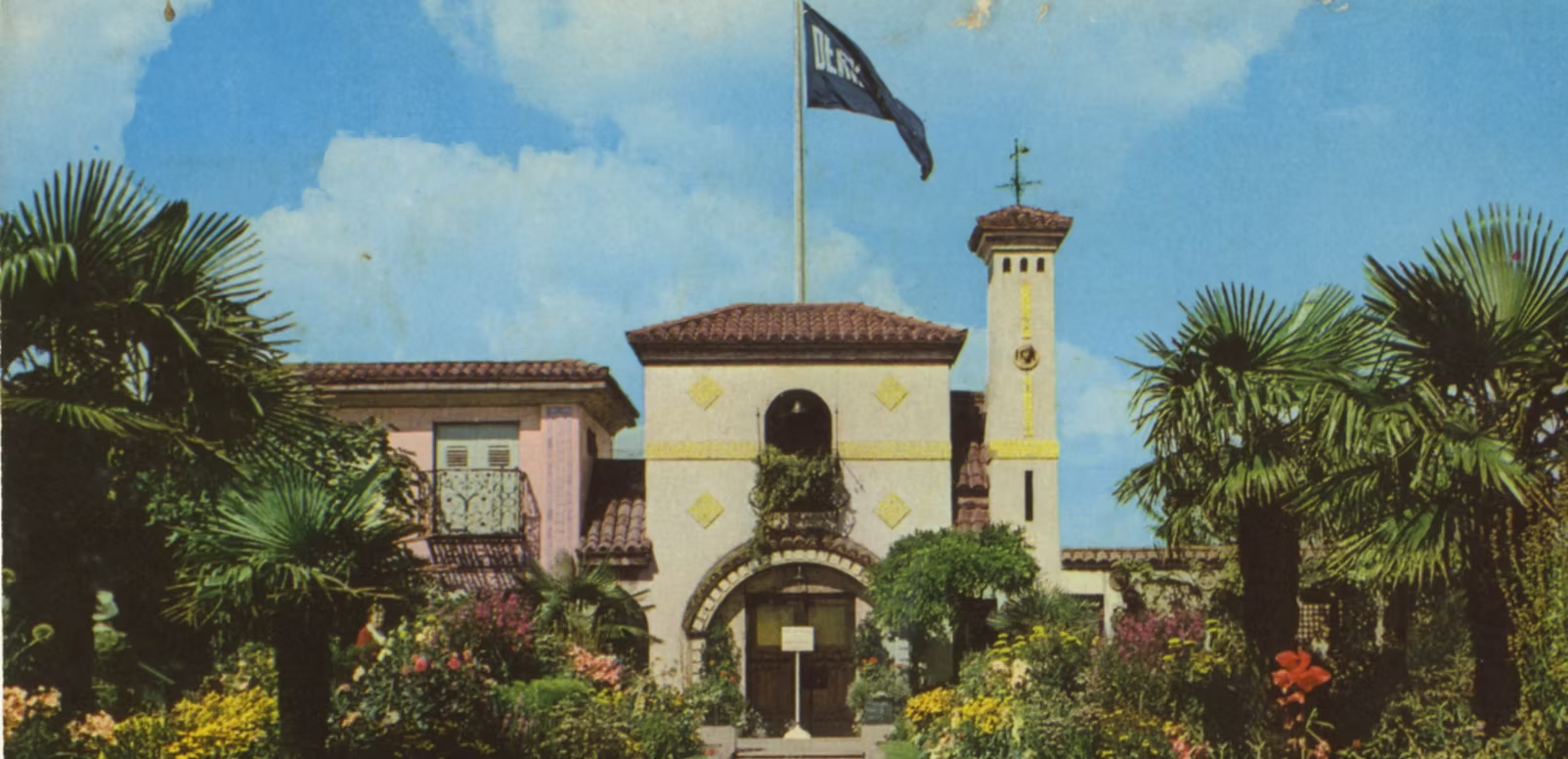
The Roof Gardens have lived many lives since their opening in 1938. They have witnessed wartime London, the glamour of the Swinging Sixties, the era of Biba and decades as one of the capital’s most sought-after nightlife destinations (Flamingos included). Yet despite these changing identities, the gardens themselves have endured.
Today, opened as a private member’s club, they remain carefully preserved and maintained, allowing guests to experience much of what Hancock originally imagined almost ninety years ago. The recent refurbishment has given Hancock’s creation a new lease of life and has reinvigorated a garden much neglected by its previous tenant.
The Engineering Behind the Fantasy
Creating gardens of this scale several storeys above ground required far more than horticultural expertise. Thousands of tonnes of soil had to be transported onto the roof, while complex drainage and waterproofing systems were incorporated to protect the building below.
Perhaps most remarkably, mature trees, shrubs and water features were installed to create landscapes that felt fully established from the moment they opened. Visitors saw beauty and tranquillity, but beneath the surface lay an extraordinary feat of engineering that was decades ahead of its time.
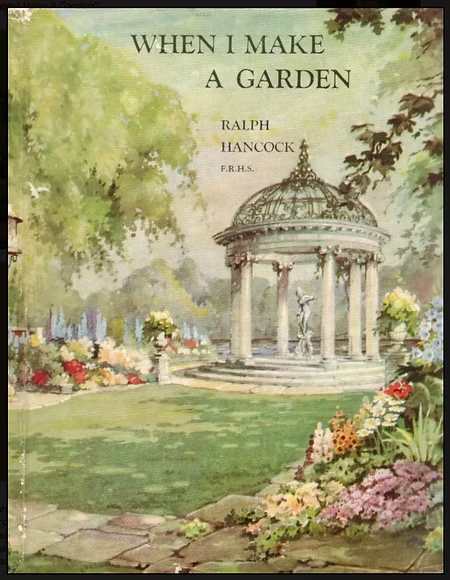
Ralph Hancock’s book ‘When I make a Garden’
Why Hancock Matters Today
Although Ralph Hancock’s name is not widely known today, his influence can be seen across contemporary cities. Green roofs, rooftop terraces and elevated urban gardens have become increasingly common as architects and planners seek to bring nature back into densely populated environments.
Hancock recognised this potential nearly a century ago. His work demonstrated that gardens could exist in unexpected places and that even the most urban settings could be transformed through landscape design. As cities continue to explore new ways of integrating green space, his pioneering vision feels more relevant than ever.
With special thanks to Robin Hull and the family of Ralph Hancock for allowing me to use the information and images above. More information can be found on Ralph Hancock’s website https://www.ralphhancock.co.uk/


Leave a Reply